
EXHIBITION | TOKYO
William Monk
「Noon Day Night」
<Dates> Tuesday,Jun 30, – Sunday,Aug 16, 2026
<Location> PACE
<Open> 11:00-20:00 Monday CLOSE
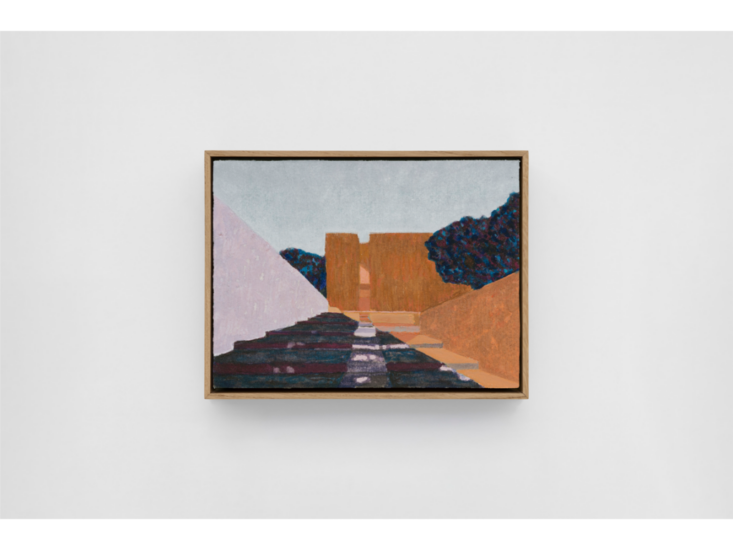
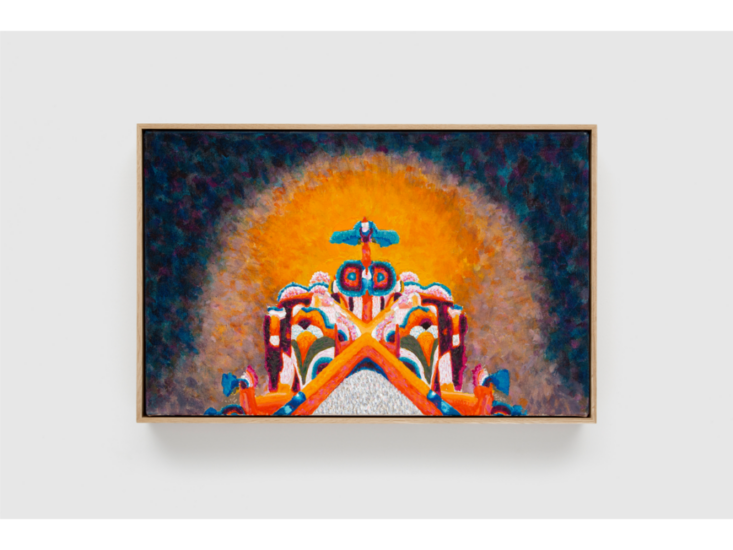
Drawing inspiration from an array of sources, including classic cinema and psychedelic rock, as well as lived experiences and images that accumulate in his subconscious, Monk paints compositions that occupy a surreal terrain of semi-abstraction. Evocative, vibrant, and often mysterious, his paintings are rooted in the rich art historical traditions of the medium. His recurring Sentinel figure—a guide poised at the threshold between worlds—finds a poetic resonance in Japan, echoing the Buddhist notion of higan, or the other shore, and the cycle of death and rebirth and the attainment of Nirvana. This crossing over or going beyond is seen in Monk’s extensive series, in which he develops his otherworldly forms with each iteration. Repetition, he explains, “forces you to look for the variation. It’s like a fractal.”
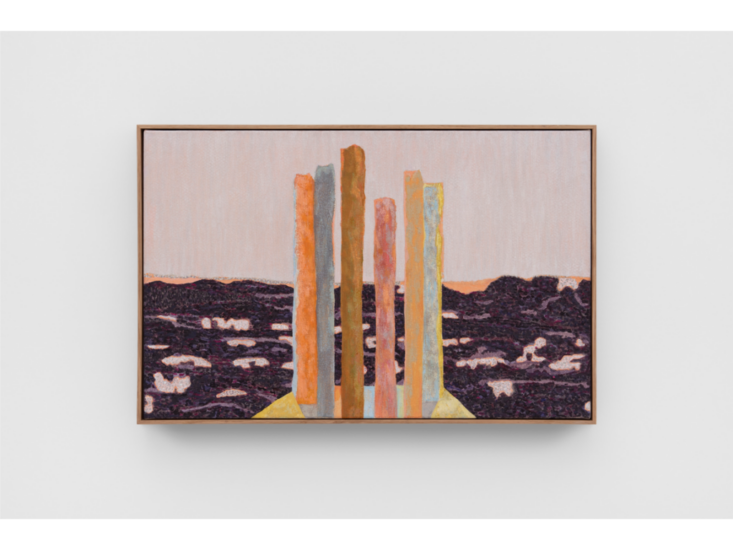
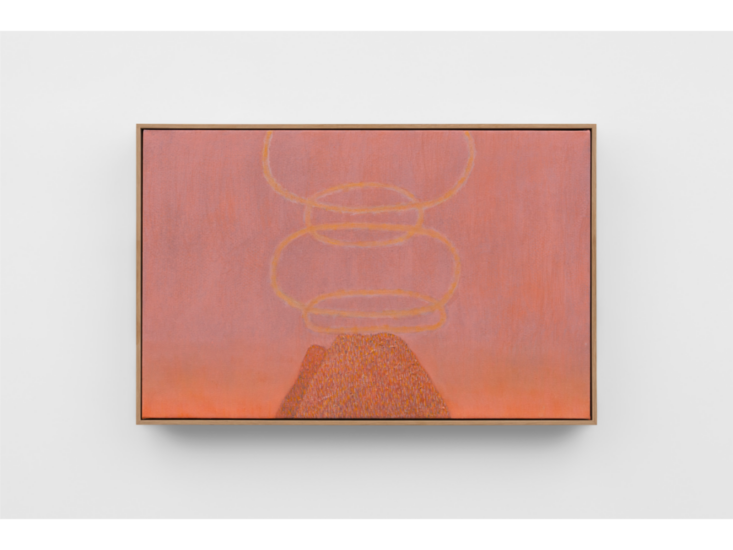
The psychologically charged nature of these works—enhanced by enigmatic, reoccurring forms such as colorful pillars, ethereal smoke rings, shadowy rock formations, and the uncanny figure of the sentinel, a guard or watcher of crossings and thresholds—speaks to the Celtic tradition of “thin places,” in which the boundaries between the corporeal and spiritual worlds become porous. In his process, Monk applies thin washes of color in layers, allowing them time to dry before adding to their chromatic complexity, to echo the heightened sense of awareness and perception inherent in “thin places.” Inviting viewers to slow down when encountering his works, he aims to open portals to uncharted realms of memory and the subconscious.
Though they obliquely reference identifiable scenes from Monk’s life—including his month-long residency at the Neuendorf House on Mallorca in 2024—as well as films such as Michelangelo Antonioni’s L’Avventura (1960) and Stanley Kubrick’s 2001: A Space Odyssey (1968), the works in Noon Day Night evade a traceable narrative.
“I thought of these paintings as depicting a moment,” he explains, “like an establishing sequence in a film.”
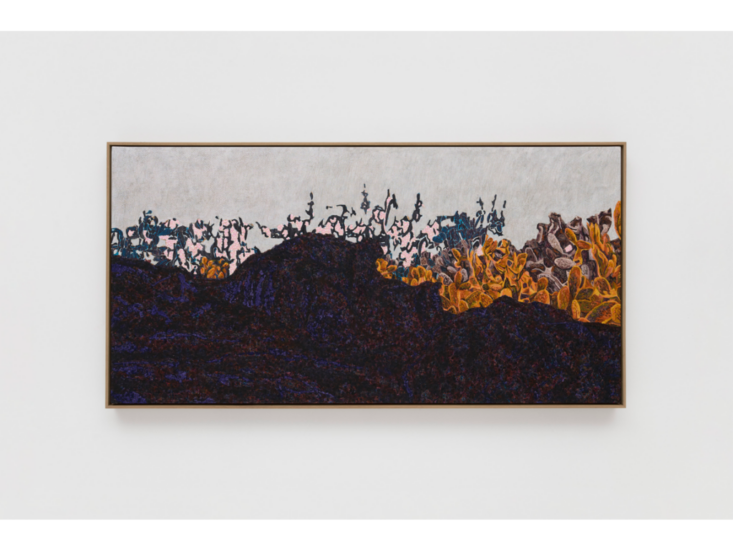
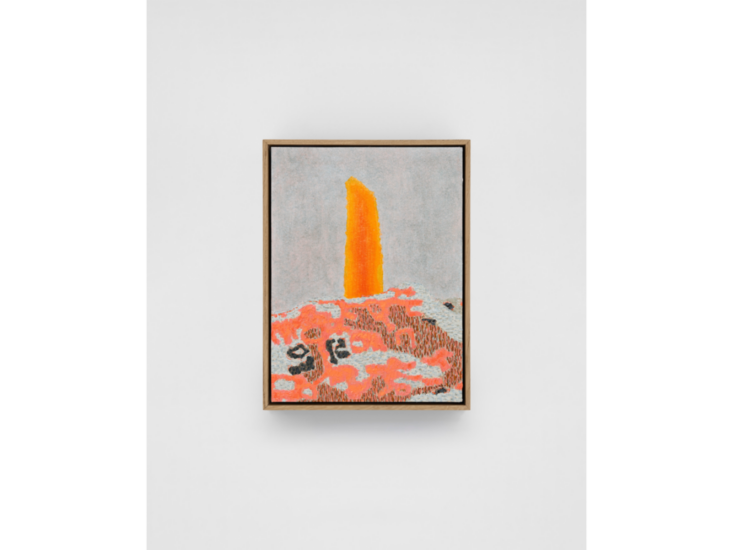
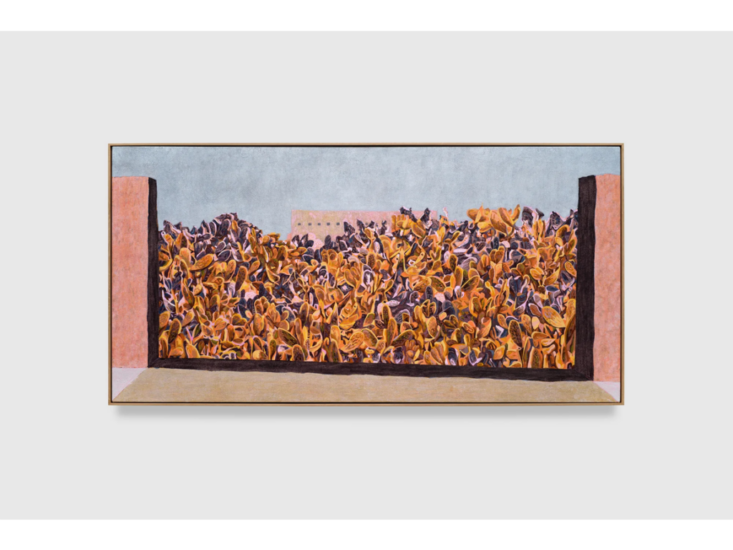
Whereas the sentinel figure appears in full in compositions like Stem I (2024–25) and Sentinel IV (2025), acting as a hinge on the canvas for a hallucinatory Rorschach test, in works such as Underworld (sentinel I) (2025) he is obscured by dense thickets of cacti and rocky peaks inspired by Mediterranean landscapes, emphasizing his role as a spirit guide toward the unknown domain of death. Similarly, while the block-like forms of works like Cactus Garden II (2025) frame the outer edges of the pictorial space, elsewhere, as in Sol Increased (son of nowhere) III (2021–26), they transform into central groups of towering columns, suggesting a kind of alien agency. Uniting the works is a shared palette of hazy greys, pinks, and purples that give way to vivid reds, oranges, and blues. What emerges is a totalizing, enthralling portrait of the artist’s psyche, allowing viewers to step into its unusual glow.
PACE
https://www.pacegallery.com/
1F; Azabudai Hills Garden Plaza-A 5-8-1 Toranomon, Minato-ku TOKYO
tel:03-6881-9400